Skip to content

4 articles

The same ordered dots appear on two scales; the transformation compresses values while preserving the group below the percentile.
Actuarial Fundamentals

How to Find Percentiles of a Transformed Random Variable (SOA Exam P)

To find a percentile of a transformed random variable, such as an insurer's payment after a deductible, invert the transformation and use the CDF you already have instead of deriving a new distribution. The post builds this from the ordinary deductible, the way SOA Exam P tends to ask it.

A small policy pool is compared with a larger one; the average-loss distribution is narrower for the larger pool.
Actuarial Fundamentals

Central Limit Theorem in Insurance: Why Pooling Risk Works (SOA Exam P)

The Central Limit Theorem (CLT) is the mathematical justification for why insurance works as a business: aggregating many risks makes the total behave predictably. This SOA Exam P study guide also covers multivariate random variables, covariance and dependence, and Eve's Law for decomposing variability.

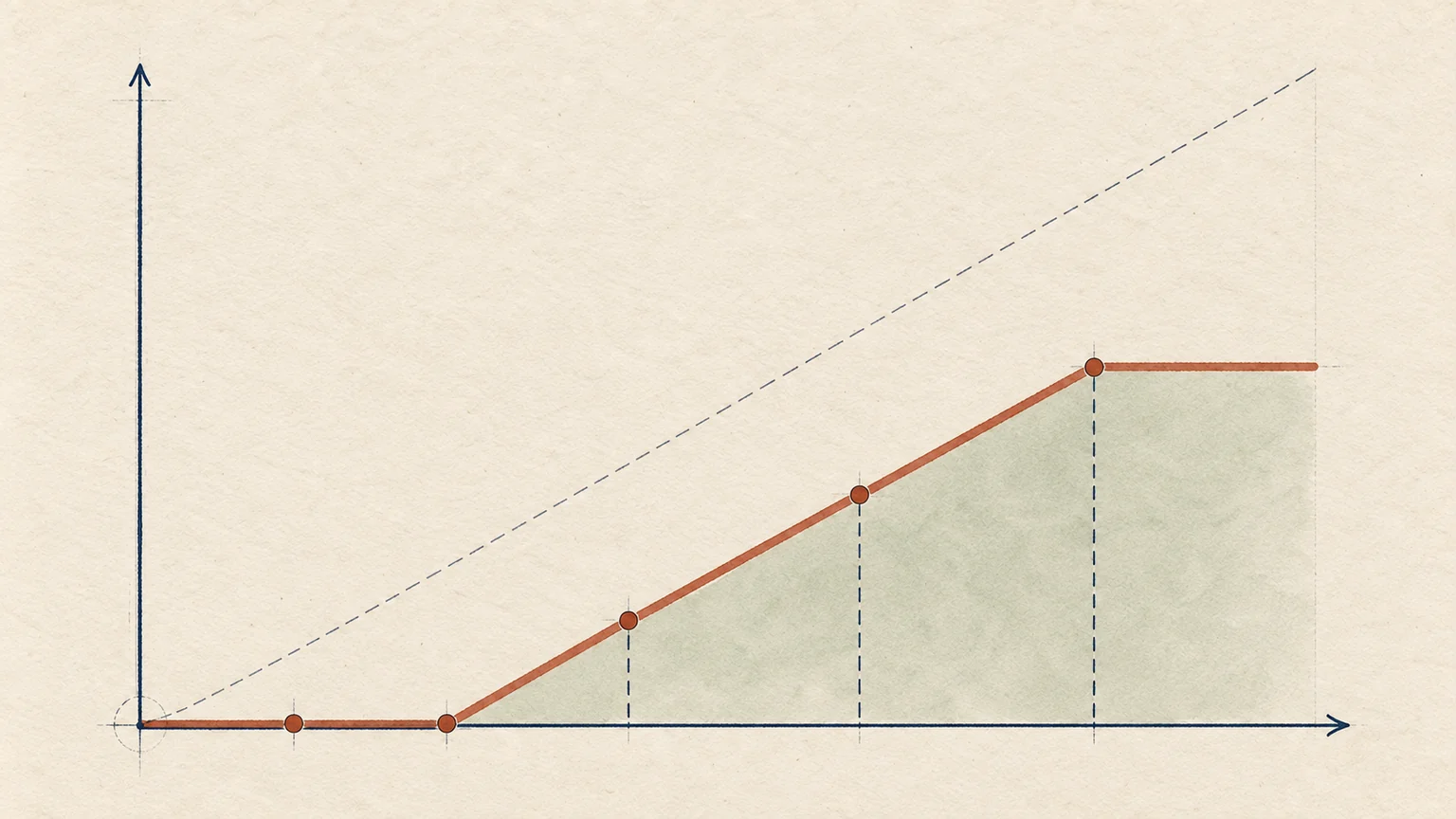
The payment curve stays at zero, rises after the deductible, and flattens at the coverage limit.
Actuarial Fundamentals

SOA Exam P Random Variables: Deductibles, Policy Limits and Payment Math

The univariate random variables section, about 45% of SOA Exam P, tests distributions, expected values and payment modifications such as deductibles and limits, and mechanical errors cost more than conceptual ones. This study guide shows how the pieces connect and why they matter in insurance.

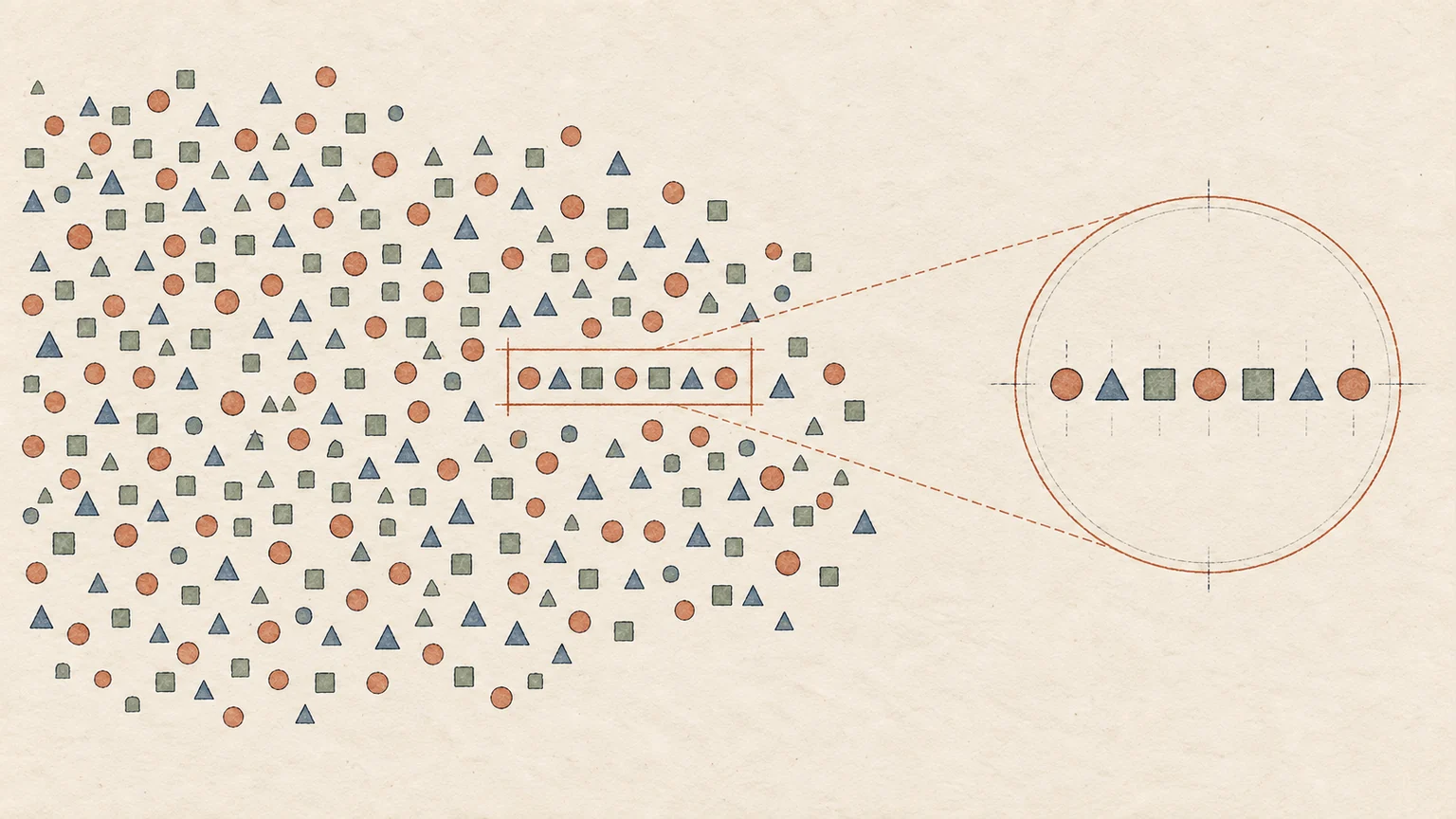
A highlighted subset of cases is enlarged; its colors stay the same while the reference population changes.
Actuarial Fundamentals

SOA Exam P Probability Study Guide: Axioms, Conditional Probability, Bayes

The first section of Exam P covers probability axioms, conditional probability and Bayes, the toolkit an actuary uses to classify risk and decide under uncertainty. This study guide explains why the SOA puts them first and how they connect to real actuarial work.